1,000-Ship “Dark Fleet”: U.S. and Ukraine Escalate Crackdown on Sanctioned Oil Network
A sprawling shadow fleet of roughly 1,000 vessels moving sanctioned oil is now under coordinated scrutiny by the United States and Ukraine, as enforcement efforts shift from isolated interdictions to targeting an entire global logistics system.
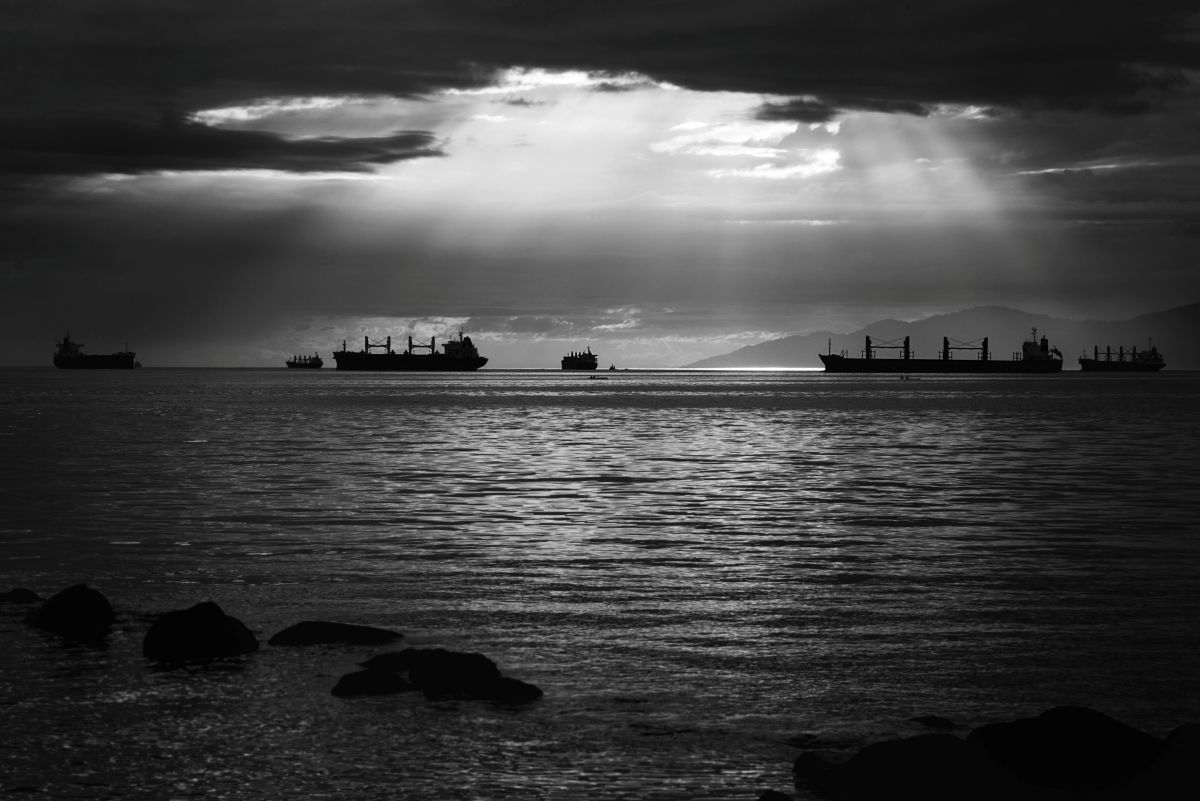
Tankers at sea, where tracking data can be manipulated to obscure the true origin of cargo.
Maritime intelligence from Windward AI indicates that the network relies on layered deception—combining ownership obfuscation, flag manipulation, and AIS spoofing—to disguise the origin of cargo and bypass sanctions regimes.
From blackout to “clean” identity
A key tactic involves temporarily disappearing from tracking systems during critical phases of loading, only to reappear with altered data:
- AIS signals are switched off near Iranian loading zones
- Cargo is taken onboard outside normal visibility
- Vessels later re-emerge broadcasting Iraqi affiliations or destinations
The result is a reconstructed shipping narrative that presents the oil as legitimate—despite its sanctioned origin in Iran.
Blockade pressure is starting to bite
The U.S. maritime blockade, launched on April 13, has been rolled out in phases—beginning with naval positioning and expanding into tighter monitoring and enforcement. The objective is to force Tehran back to negotiations over its nuclear program by constraining its primary revenue stream.
According to Windward’s tracking, more than two dozen tankers are now effectively bottlenecked west of the Strait of Hormuz, with Iranian oil exports reportedly cut by over 50% as a result of the pressure.
Not just volume—structure
The emergence of specific vessels such as the Paola (handysize) and Adena (LR1), both signaling Iraqi ownership while linked to sanctioned networks, points to a broader pattern: the system is not ad hoc—it is structured.
Rather than relying on a few rogue operators, the “dark fleet” functions as a distributed infrastructure:
- Multiple vessel classes (VLCC, LR1, handysize)
- Rotating identities and registries
- Coordinated signal manipulation
The bigger shift
What is unfolding is less a cat-and-mouse chase and more a transformation in how sanctions are contested. Enforcement is no longer just about intercepting ships—it is about dismantling an adaptive, data-driven supply chain designed to survive pressure.
For policymakers, the implication is clear: targeting individual tankers may have diminishing returns. The real battleground is the network itself—and the digital systems it exploits.
Based on maritime intelligence data from Windward AI